
Exterior AI: How to Redesign a House From One Photo Off the Pavement
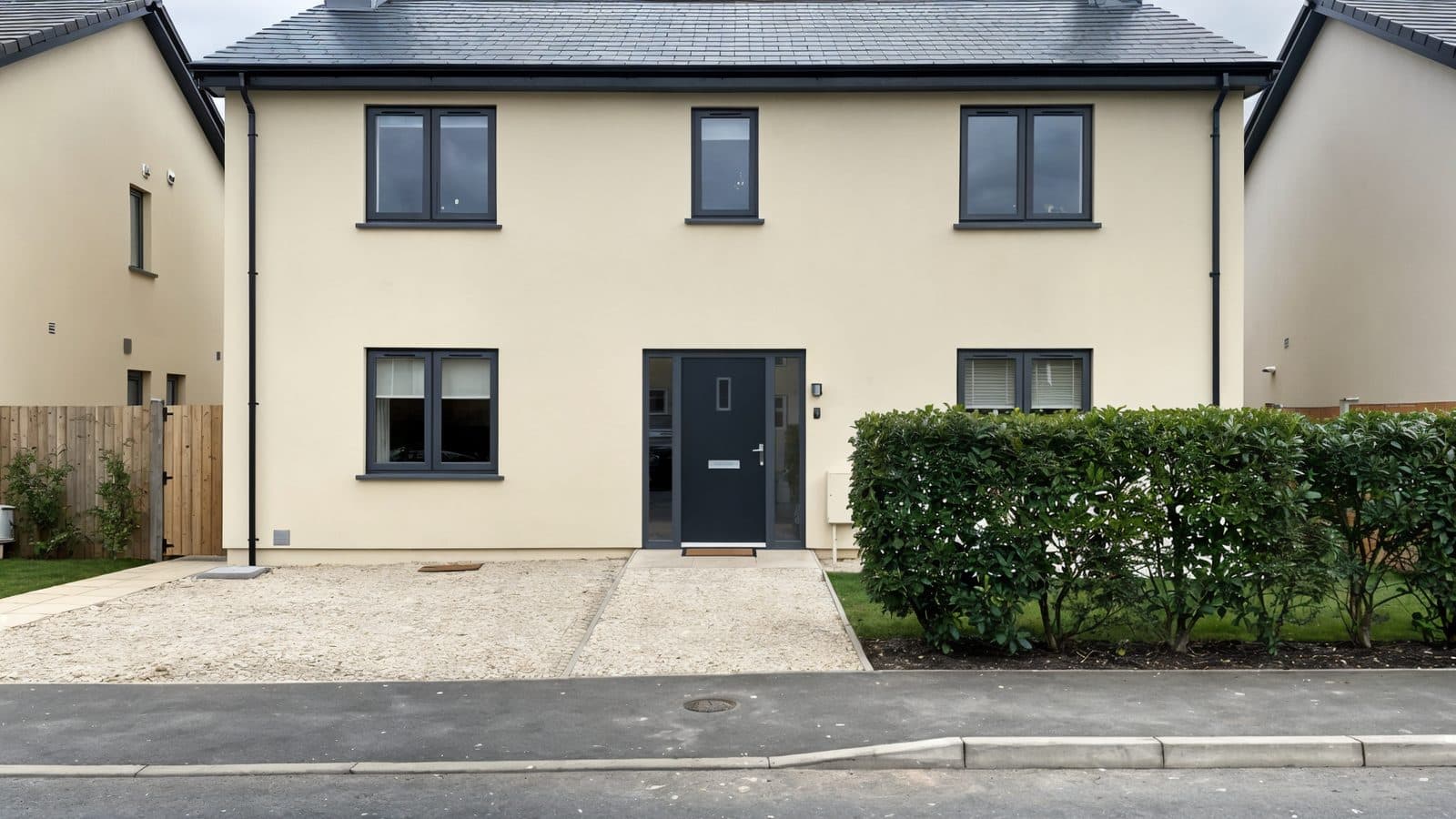
There are four painted squares by my neighbour's front door. Sage, two greys and something that was probably called Clay. They went up in April. They are still there in September, faded slightly, and the house is still the colour it was.
Exterior paint is the decision people stall on longest, because getting it wrong is expensive, visible from the street, and yours for the next decade.
Exterior AI solves a fairly narrow problem, but it's the right one. You photograph your house, describe what you want, and get back a photorealistic version of that same house with the change applied. Same roofline, same windows, same neighbours' fence in shot. Just a different answer to the question you're stuck on.
What the tool is doing
It's easy to assume this is just an image generator with a house prompt. It isn't, and the difference is the whole point.
A general image model asked for "a white farmhouse with black windows" gives you a white farmhouse. Not yours. Somebody's. The proportions will be wrong, the windows will be in the wrong places, and the roof pitch will be whatever the model felt like.
An exterior AI tool takes your photo as the structural base and treats it as fixed. Wall positions, window openings, roof geometry, the driveway, the tree on the left, all held still. What changes is the finish: cladding, render colour, window frames, door, roofing material, lighting, planting. You end up with a picture of your house that you could hand to a contractor.
That's the bit that makes it a decision tool instead of a mood board.
What people bring it
From what we see, exterior work clusters into about six jobs:
Paint and render colour. By far the most common. Usually somebody has narrowed it to three colours and can't choose.
Cladding and material swaps. Brick to render, render to timber, timber to composite. Big money decisions where the samples never tell you enough.
Window and door frames. Changing white uPVC to anthracite grey is one of the highest impact, lowest effort changes on most houses, and almost nobody can picture it in advance.
Roof replacements come up more than you would expect. Tile colour changes the read of the whole house, and most people only discover that once the scaffolding is down.
Then the front garden and driveway: hard landscaping, planting, where the bins end up going.
And extensions and loft conversions, where the point is seeing the mass of the thing against the existing house before the architect's fee starts running.
Getting a photo that works
This is where most people go wrong.
It is worth two minutes of care, because the input photo sets a hard ceiling on the output. Nothing downstream recovers a bad one.
Shoot in flat light. Overcast beats sunny, because hard shadows across a facade confuse the render and you'll get odd patches of colour where the shadow was.
Stand far enough back to get the whole house plus a bit of sky and a bit of ground. If you have to tilt the phone up, back off further instead. Tilting distorts the vertical lines and the render inherits the distortion.
Shoot straight on for the main elevation, then take a second one from about forty five degrees. The angled one is usually the more convincing image and the one you'll end up showing people.
Get the whole thing in frame. If the render has to invent the left third of your house, it will, and it'll invent it wrong. If the shot will not fit, Expand AI can extend the frame, but a better photo beats a repaired one.
Clean the shot where you can. Move the wheelie bin. Move the car if it's blocking half the frontage.
Running the comparison
Upload the photo to Exterior AI, then generate your shortlist one variable at a time. Change the wall colour and keep everything else fixed. Then change the windows and keep the wall fixed. Change one thing per render.
The temptation is to generate "the whole new look" in one go, and then you've got three images that differ in five ways each and you cannot tell which change you liked. One variable at a time is slower for about four minutes and much faster overall.
Put the finalists side by side rather than flicking between them. Anything looks good on its own.
Then, and I'd push hard on this one, look at them on a phone outdoors. Facade colours behave completely differently in daylight than on a bright monitor in a dark room. Warm greys in particular go pink outside in a way that catches people out.
The seasonality nobody tells you about
I pulled twelve months of Google Trends data to the end of August 2026. Worldwide interest in "exterior ai" averaged 22 on a normalised scale, and it wasn't remotely flat across the year.
| Period | Relative interest |
|---|---|
| September to December 2025 | 14 to 24 |
| January to February 2026 | 15 to 21 |
| March to June 2026 | 28 to 38, the peak |
| July to August 2026 | 5 to 16 |
Interest roughly doubles between February and April. Which makes sense, because that's when people look at their house after winter and decide to do something about it. Exterior work is weather dependent in a way interior work isn't.
The practical implication is about booking, not searching. If you want exterior work done in spring, the decision needs to be made in autumn or over winter, because by March the decent contractors in most markets are already quoting for July. Doing the visual decision in October costs you nothing and buys you the pick of the trades.
Where it's weak
Worth being straight about this.
It's not a structural tool. It'll happily render an extension that isn't buildable, and it has no opinion about your local planning rules. It shows you what something looks like, not whether you're allowed to build it or whether it'll stand up.
It won't match a specific paint code. You'll get a colour that reads as sage green, not a render guaranteed to be Farrow and Ball Lichen. Use it to choose a direction, then get physical samples for the final call.
And it's only as good as the photo. A dark, tilted, half obscured phone snap gives you a dark, tilted, half obscured render. That's not the model being bad, that's the model being faithful.
Common questions
Can exterior AI use a photo of my actual house?
That is the entire point of it. Upload a photo and the tool holds your building's geometry, windows and roofline steady while changing only the finishes you asked about. Anything that generates a house from scratch instead of from your photo is doing a different job.
Is exterior AI free?
Exterior AI on Luw.ai has a free tier, so you can run a colour comparison without paying. Paid plans exist for higher resolution exports and volume, which matters if you're an architect or an agent rather than a homeowner doing one house.
How accurate are the colours?
Accurate enough to choose a direction, not accurate enough to skip physical samples. Screen colour depends on your display, and exterior colour depends on your light. Narrow to two options on screen, then buy tester pots for those two.
Can I use the renders with my builder or architect?
It is one of the better uses, in fact. A render of your own house is far less ambiguous than describing "a sort of warm grey, but not too blue". It won't replace drawings, but it removes a lot of the back and forth about intent.
Does it work for commercial buildings?
It does. Facade studies for offices, retail and hospitality work the same way, and Luw.ai for architects is aimed specifically at that workflow, including CAD and sketch inputs rather than photos.
What about the garden and driveway?
Same photo, different request. Ask for the planting, paving or driveway change and leave the house alone. Front garden changes are usually cheaper than facade changes and often do more for kerb appeal, so it's worth testing both before deciding where the budget goes.
Where to start
Take one photo, straight on, on an overcast afternoon. Upload it to Exterior AI. Generate your three shortlisted colours with nothing else changed. Look at them outside on your phone.
That's about ten minutes of work to settle a decision most people carry around for half a year.
Related reading